




Home \(\blacktriangleright\) Children and Youth Unit \(\blacktriangleright\) Arrows Website \(\blacktriangleright\) Museums in France \(\blacktriangleright\) Activity 2: The Louvre
Activity 2: The Louvre – From Palace to Museum
The Louvre Museum in Paris is the largest and most iconic museum in France, and one of the largest, most famous, and oldest museums in the world.
The Louvre was established inside a building that previously served as a French royal palace. The high, spacious, and decorated spaces of the building inspire an atmosphere of reverence toward the exhibits among the museum’s visitors.
The design of the museum space is aimed at influencing the visitors’ experience and charging it with a sense of solemnity, on the verge of sacredness.
In this activity (by Hadas Netzer Dagan), we will explore the Louvre as a unique example: we will examine the story of the transition from a private palace of the kings of France to a public national museum.
We will focus on the way the exhibits, the collections, and the space (its magnificent architecture) tell the story of France and affect our feelings as visitors.
The Activity
A Journey Through Time: A Royal Palace
- Ask the children to imagine what a palace looks like – what it looks like from the outside, what the different rooms in it look like, what their size is, and what the passages and corridors in it look like.
You can suggest that the children draw the museum they see in their mind’s eye or create it using another tangible material (clay, modeling clay, sand).
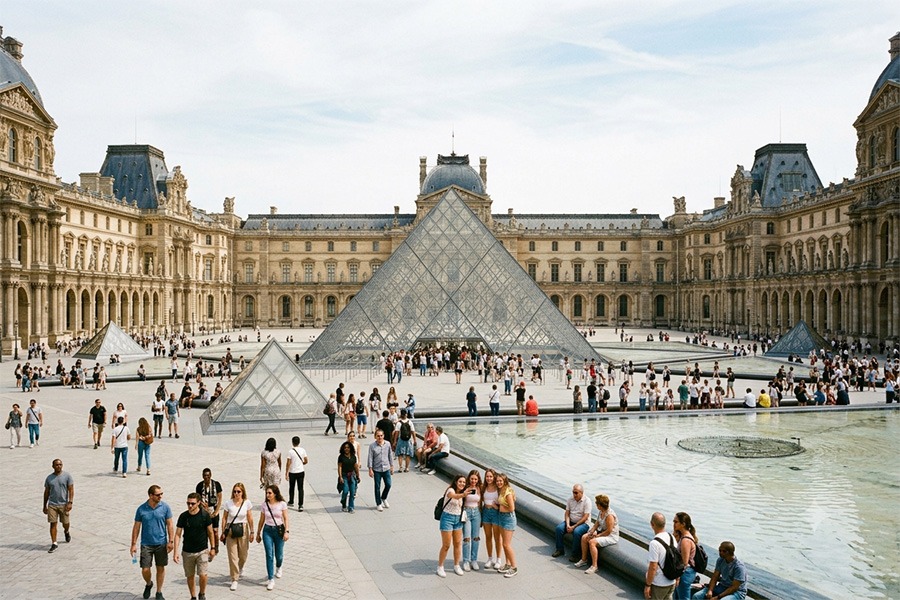
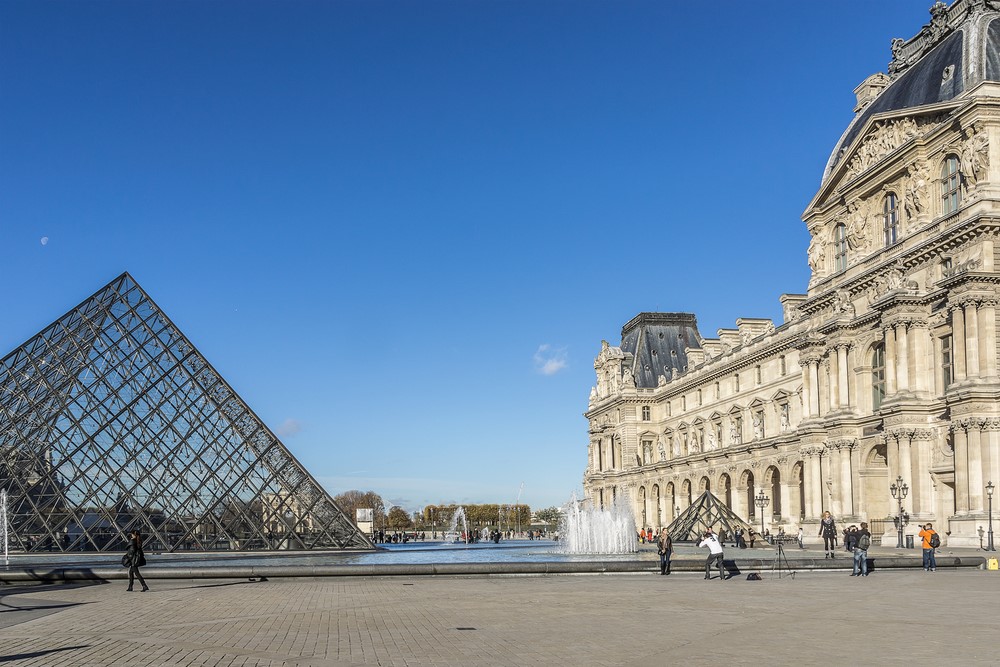
Show the children pictures of the Louvre Museum building. Is it similar to or different from the palace the children imagined and created?
\(\space\) - Ask the children to imagine what the lives of children who lived in the building looked like when it served as a royal palace. What did their room look like, where did they play, and what did they play with?
Look at pictures of the museum’s interior spaces. Do you recognize in them the use they once had for residential living? Is it easier now, or more complicated, to imagine the lives of the children who lived in this building?
\(\space\) - Go to the Louvre Museum website and take part in the virtual tour.
Meet the Palace’s Important Guests: The Artworks
Explain to the children that the royal palace became the home of artworks from all over the world, which are special “guests of honor.” Choose a few famous pieces together and explore them:
- Choosing the Characters: Present pictures of famous works from the Louvre such as the Mona Lisa, the Venus de Milo, or the Winged Victory of Samothrace.
Ask the children to choose the work that intrigues them the most.
\(\space\) - Making Up a Story: Look together at the piece they chose. Ask them: what story does it tell? Who do you think the mysterious woman in the painting is? What is it made of? What journey did it go through to reach the Louvre? Encourage them to make up their own stories and characters around the work.
\(\space\) - Virtual “Treasure Hunt”: Use the Louvre’s virtual tour to find the works you chose together. Challenge the children: “Let’s see if we can manage to find the Mona Lisa in the vast corridors of the palace!”