




Home \(\blacktriangleright\) Children and Youth Unit \(\blacktriangleright\) Arrows Website \(\blacktriangleright\) Music in France \(\blacktriangleright\) Activity 3: The Carnival of the Animals
Activity 3: The Carnival of the Animals
Embark on a journey into the world of classical music with “The Carnival of the Animals” by the renowned French composer, Camille Saint-Saëns.
The activity proposed here (by Dr. Omri Ruach Midbar) will help you and your children experience the piece in a tangible and imaginative way, through listening, sculpting with modeling clay, and even dramatizing various sections.
Background for parents
The piece The Carnival of the Animals was written in 1886 and consists of 14 short movements, each describing a different animal:
1. Introduction and Royal March of the Lion
2. Hens and Roosters
3. Wild Asses
4. Tortoises
5. The Elephant
6. Kangaroos
7. Aquarium
8. Characters with Long Ears
9. The Cuckoo in the Depths of the Woods
10. Aviary
11. Pianists
12. Fossils
13. The Swan
14. Finale
The initial introduction to the piece will be done by watching it online.
The Activity
- Parents are asked to choose the first section they will show the children.
It is recommended to split the introduction to the piece over several days:
Show one or two sections of the piece each time and not the whole thing at once.
\(\space\) - It is advisable to watch the sections before exposing them to the children,
to ensure that the sections shown to the children are emotionally suitable for them.
\(\space\) - Join the child’s initial viewing to get an impression of their experience.
\(\space\) - Watch a section of the piece more than once, if you feel the child can enjoy it.
It is worth trying to playfully imitate prominent parts of the piece or share experiences with the children.
For example: “And now he is going to beat the drum – ready? Here: boom, boom, boom!” or: “What a cute chime… that’s the chirping bird,” etc.
This imitation creates a shared experience for parents and children around the listening and makes it more active and more enjoyable.
This way, children will get more out of the music and get to know it deeply.
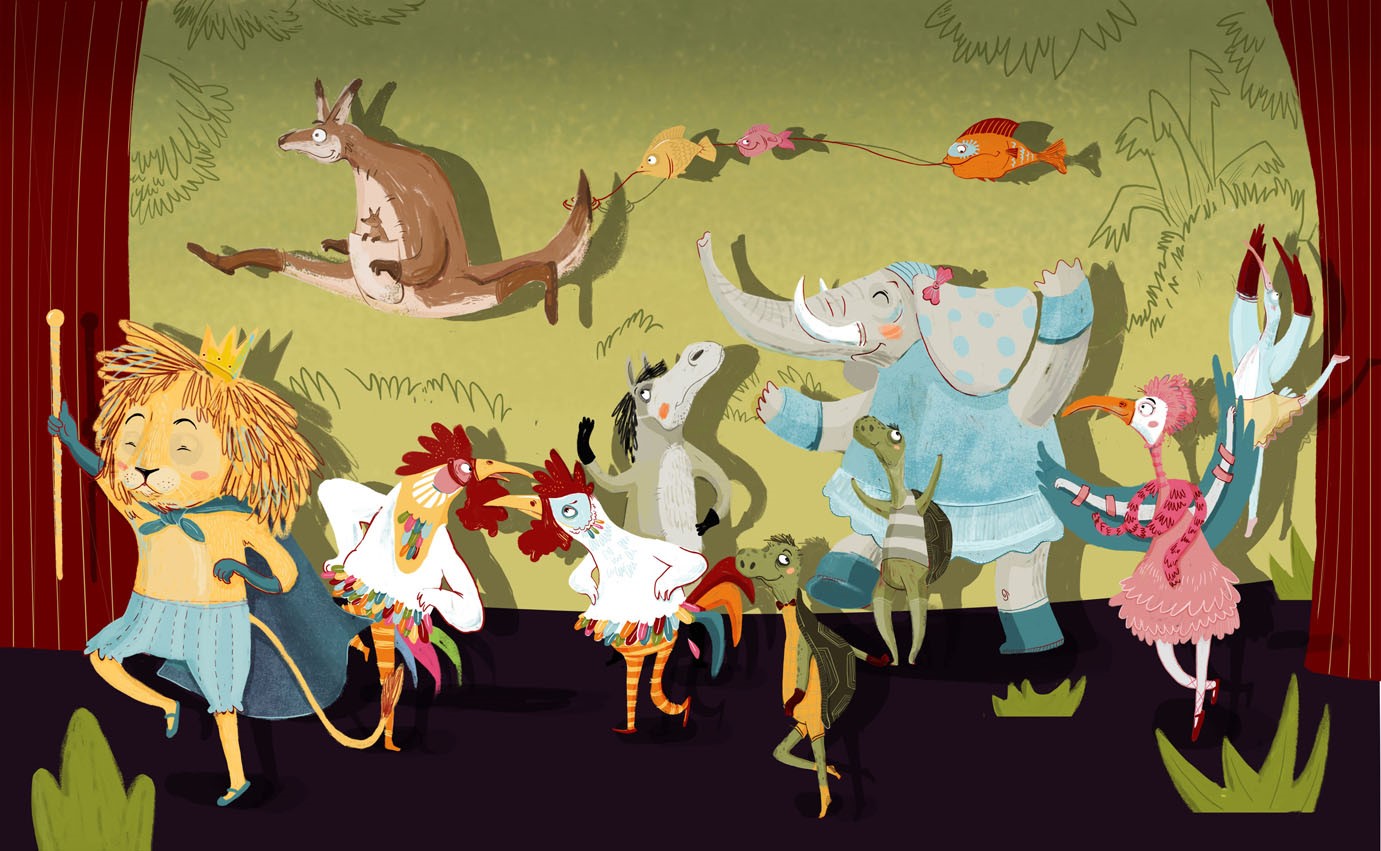
- Characters from the piece can be built out of modeling clay.
You can use Rony Oren’s books, which guide the creation of modeling clay characters step-by-step. After the children have become familiar with the piece,
it is highly recommended to play the piece for them without the visual aspect (which they can complete in their imagination, after knowing the pieces well) during a car ride (*), or in a listening corner at home (at first, not as background for another activity).
(*) The soundtrack can be extracted from any video clip using conversion software. For example, the free software YouTube Downloader.
\(\space\) - Browsing Books
To deepen the experience, children can be presented at this stage with books dedicated to this piece that are intended for children (from the library or bookstore).
Later on, the piece can be played in the background at home and/or in the car.
\(\space\) - Dramatization of sections from the piece.
These expand the shared experience around it and deepen the children’s familiarity with it.
With the help of the parents, the children can choose a section from The Carnival of the Animals, various props for the performance, and scenery.
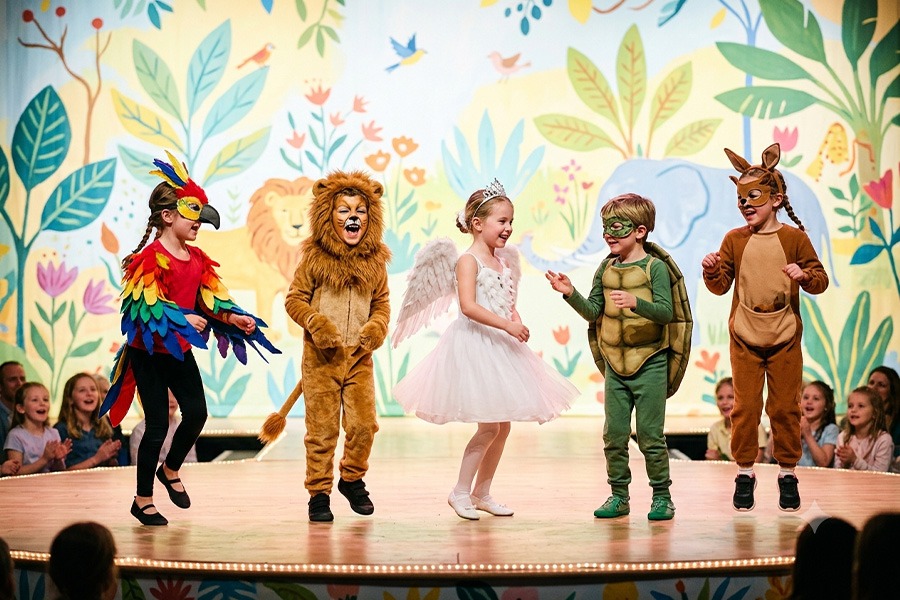
While the piece is playing, the child can dress up as the animal and, according to the music played, perform it.
\(\space\) - Watching dance performances to the music of The Carnival of the Animals.