Activity 2: Kente Cloth – The Symbolic Language of Color and Weaving
Fabrics are a symbol! Let’s learn about the famous Kente cloth of the Ashanti people and the way many African cultures use textiles to communicate. In this activity (written using Gemini 2.5 Flash AI), we will examine the meaning of each color and the significance of the different weaving patterns. We will try to design a Kente pattern that conveys a personal message.
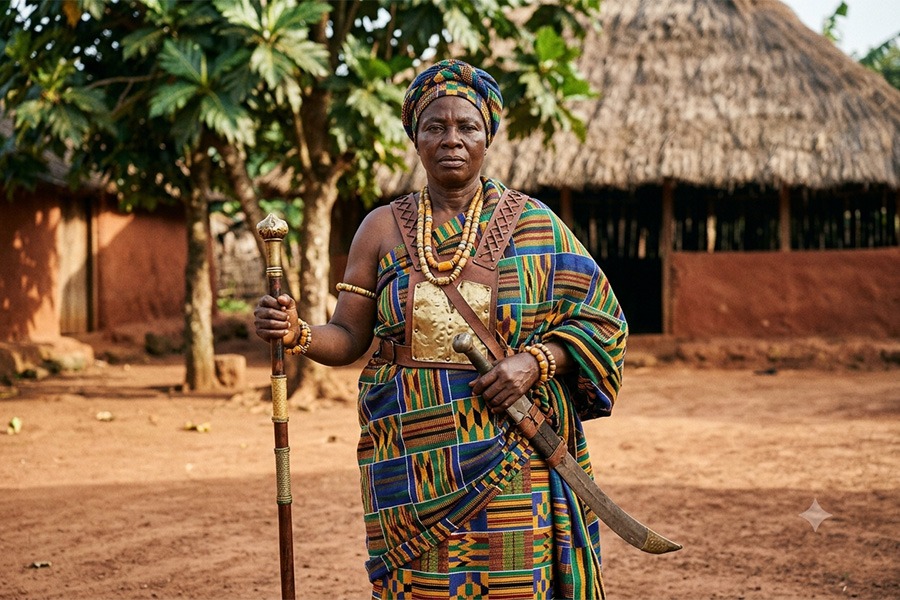
The Kente cloth from the Ashanti tribe (Ghana) is one of the most royal and recognized fabrics in Africa. The colors and patterns of the cloth are distinct symbols representing status, a historical story, or an idea.
The Activity
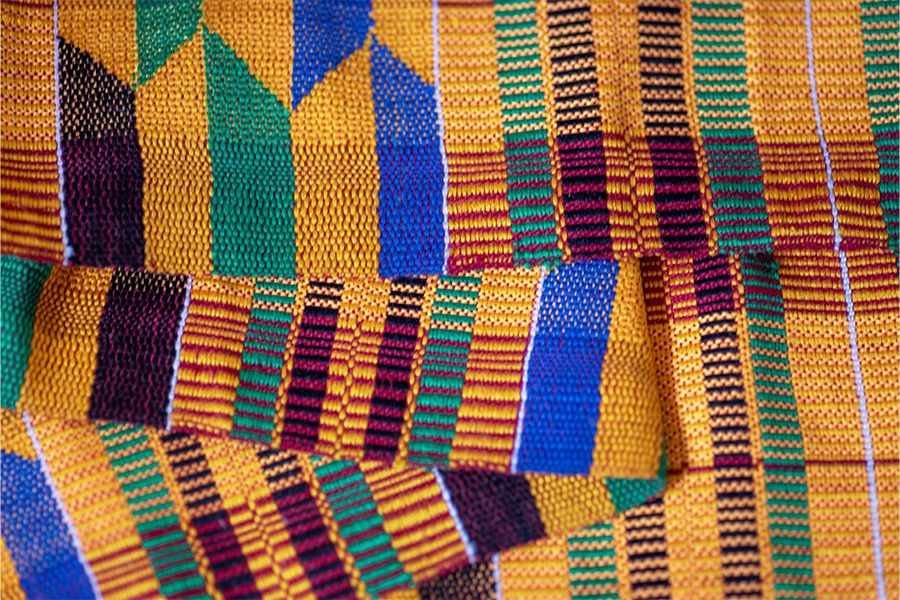
Introducing the fabric: Show an image of a colorful Kente cloth. Explain: “In this place in Africa, clothes are not just beautiful, they have secrets! Each color tells a story.”
Introduce the main colors in Kente fabrics and their symbolic meaning: Gold / Yellow: Joy, happiness, good feeling. Green: Health, nature, growth. Red: Courage, bravery. Black: Strength, maturity. \(\space\)
Ask the children: “Which color ‘superpower’ do you need today? Which quality will help you?” (For example: “I choose red because I want to be brave today”). \(\space\)
For older children, the weaving patterns can also be introduced. Emphasize that the patterns also have meaning: Straight line / Rectangle: A symbol of stability and order. Triangles / Zigzag: A symbol of difficulties, challenges, or journeys.
Each child receives a small square or rectangular strip of paper. Ask the children to design their fabric using colors and shapes (there is no requirement for precise geometric patterns – the main thing is the color). The children can present a message on their strip of “fabric,” which the parents will then try to guess. They can add patterns of lines, triangles, or squares that match the message they chose (for example, many rectangles if the message is “order”). They can use paints/markers, as well as crepe paper, pre-cut bristol board pieces, colorful strings, or stickers.
אתר זה עושה שימוש שימוש בקבצי עוגיות (COOKIES) וטכנולוגיות מעקב לצורך תפעולו התקין ואבטחתו וגם למטרות נוספות כמו שיפור חווית הגלישה, ניתוח נתונים סטטיסטיים פרסום מותאם אישית או מבוסס העדפות. אנו לא נתקין באמצעות האתר על מכשירך עוגיות וטכנולוגיות מעקב נוספות שאינן הכרחיים לתפעול הטכני של האתר ללא הסכמתך. למידע נוסף אנא עיין בחלק "נתונים שאינם מידע אישי אשר אנו אוספים באתר" במדיניות הפרטיות שלנו.
"This website uses cookies and tracking technologies for its proper functioning and security, as well as for additional purposes such as improving your browsing experience, statistical data analysis, and personalized or preference-based advertising. We will not install on your device any cookies or tracking technologies that are not strictly necessary for the technical operation of the site without your consent. For more information, please refer to the section “Non-Personal Data we Collect" in our privacy policy