

דף הבית \(\blacktriangleleft\) היחידה לילדים ונוער \(\blacktriangleleft\) אתר חיצי”ם \(\blacktriangleleft\) המטבח המצרי \(\blacktriangleleft\) פעילות 3: עיש – לחם החיים
Activity 3: Eish - "The Bread of Life": The Story of the National Dish
This activity sheet invites you to explore Eish – the Egyptian bread of life, which was and remains the basis of the diet in Egypt.
Through it, you will get to know the ancient history of bread, its centrality in the lives of poor Egyptians, and the name “Eish” which testifies to its importance.
In a practical activity, you will learn about the first use of yeast in ancient Egypt, the process of gluten formation, and the principles of kneading.
The challenge: to prepare the traditional Egyptian bread yourselves!
The Activity
General background on the bread of life
Egyptian bread is called Eish (عيش, meaning “life”) or Egyptian / Baladi Eish. The word “Eish” itself comes from the Arabic root a.a.sh, whose meaning is “to live,” reflecting the centrality of bread in life in Egypt.
It is defined as “life” because it is the basis of Egyptian cooking and is served with almost every meal. In fact, a meal of the working class or in rural areas in Egypt can contain no more than bread and legumes.
This bread is a rich pita filled with gluten, and in modern Egypt, the government subsidizes it to ensure the nutrition of poor residents.
Bread was common in ancient Egypt and constituted an important component in the Egyptians’ diet. The beginning of baking is attributed to ancient Egypt, where many hieroglyphs (ancient writing) contain descriptions of over 20 different types of bread and the methods for preparing it. The Egyptians were also the first to grind grain seeds using millstones.
Millstones are a device composed of two stones, in which the upper stone moves over the lower stone in a circular or linear movement.
With one hand, the wheat seeds are poured into a hole in the center of the upper stone. The second hand rotates the upper millstone using a protruding stick.
The seeds are caught between the two millstones, worn down, and ground between the stones.
The flour spills out around the millstones.
After the hard grinding work, which was performed by women, the Egyptians would knead the dough with their feet.
In archaeological excavations, bakeries and closed baking ovens made of ceramics were discovered, which could bake a large number of breads simultaneously.

For the bread of the Pharaohs and members of the upper class, crushed dates and honey, fruits, sesame, poppy seeds, and other spices were added.
Bread with the addition of butter is called “sun bread,” and it is produced even today in Egypt, similar to its original production process.
According to archaeologists’ hypotheses based on examining the teeth of mummies discovered in excavations, bread in ancient Egypt was filled with stone fragments and sand that caused constant grinding of the teeth and their destruction.
According to the theory, this was caused because the linen sifters the Egyptians used to filter the flour were not efficient enough.
And how is it even possible to know that they ate bread in ancient Egypt and how they prepared it?
Well, archaeologists discover what happened in the past, thousands of years ago, by excavating and finding antiquities.
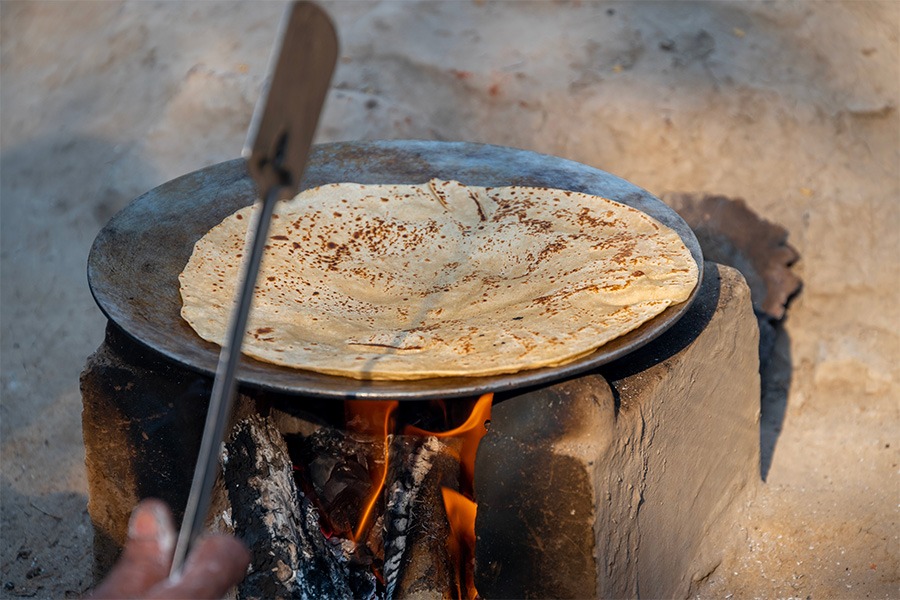
In Egypt, remains of ovens were found, as well as pictures and statues presenting the bread production process. Also, in ancient tombs, loaves of bread were discovered that were brought as offerings for the dead, as provisions for their journey, and were preserved in the dry climate of Egypt for about 5,000 years.
Scientific background on bread baking
When mixing flour and water, a sticky paste is formed. This happens as a result of a protein found in wheat flour called gluten or in Hebrew “Davkan” (Glue in English means glue).
The gluten enables the “gluing” of the flour components and turning them into dough.
But to prepare bread, it is not enough to mix the dough ingredients; one also needs to knead. During kneading, the dough is stretched and a network of flexible fibers is formed – these are the gluten fibers.
This network traps air entering the mixture during the kneading, as well as gases emitted by an important component in the dough – the yeast.
The first use of yeast for baking bread is attributed to ancient Egypt.
Yeast consists of single-celled fungi used for leavening dough, for creating alcoholic beverages such as dark and light beer, wine, and champagne.
The growth of yeast depends on the presence of sugary or starchy food.
The sugar is digested by the yeast cells and undergoes a fermentation process, in which it turns into alcohol (liquid) and carbon dioxide (gas).
The gas emitted into the environment is what causes the leavening of all kinds of baked goods, and the alcohol formed (ethanol) is the intoxicating substance present in wines, liqueurs, and more.
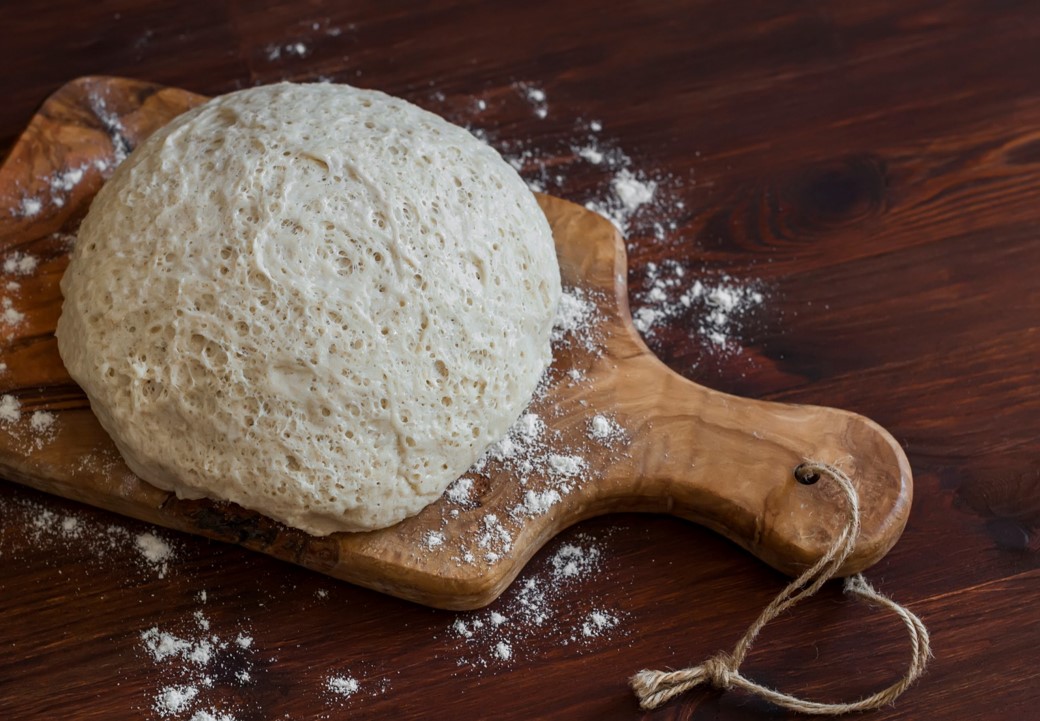
Structure of a network of fibers stretching during the kneading of the dough
Eish - The Bread of Life
💡 The bread in Egypt is called Eish, which means “life.”
Why do you think the meaning of the bread’s name is ‘life’? What can be understood from this about the role of bread in Egyptian life?
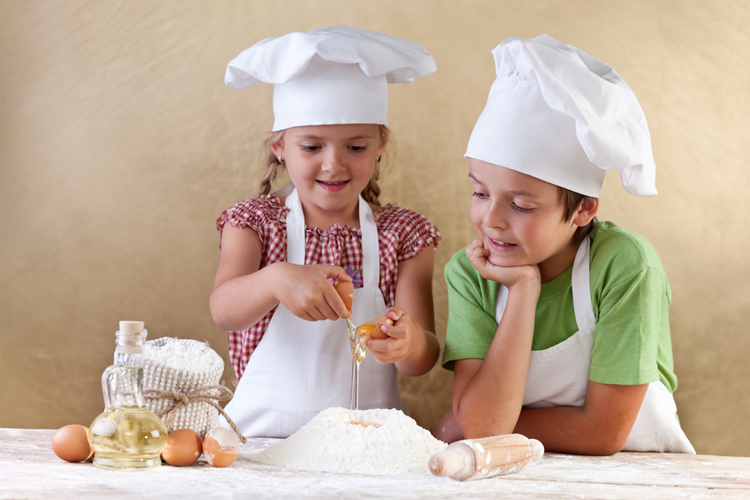
Bread Baking Recipe
The recipe and pictures are taken from the website momsrecipesandmore.blogspot.com
Ingredients:
A tablespoon (=11 grams) dry yeast
\(\space\)
A teaspoon sugar
\(\space\)
500 ml lukewarm water
\(\space\)
600g bread flour
\(\space\)
200g whole wheat flour
\(\space\)
Two teaspoons salt
\(\space\)
Three tablespoons olive oil
Instructions:
- In a bowl, put the water, sugar, and yeast and mix lightly.
Let ferment for 10 minutes.
\(\space\) - Gradually add the flours, the salt, and the oil.
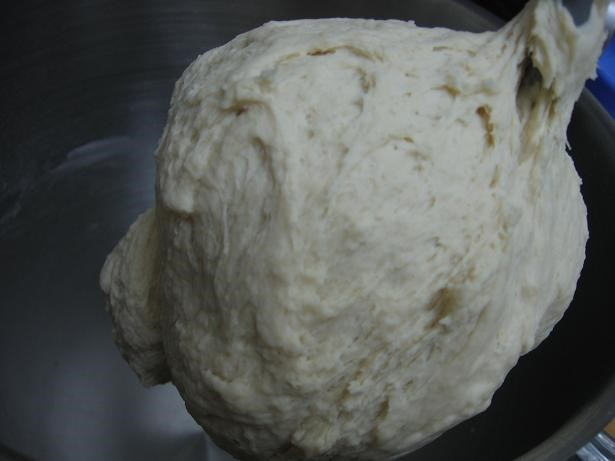
\(\space\) - Knead well until a smooth and soft dough is obtained.
Add flour/water as needed.
\(\space\) - Transfer to a greased bowl.
Wrap in plastic wrap / a kitchen towel.
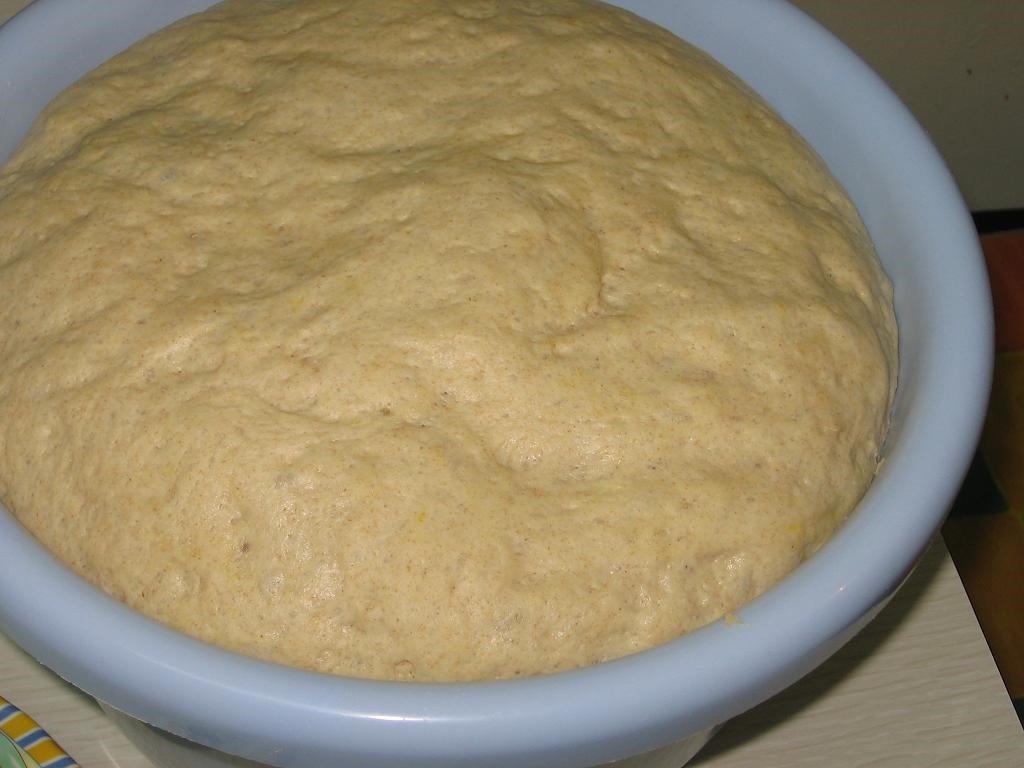
Let rise in a warm place until doubled in volume – an hour to an hour and a half.
\(\space\) - Punch down the volume by light kneading, and let rise again for about half an hour.
\(\space\) - Divide the dough into 2 parts.
Create loaves.
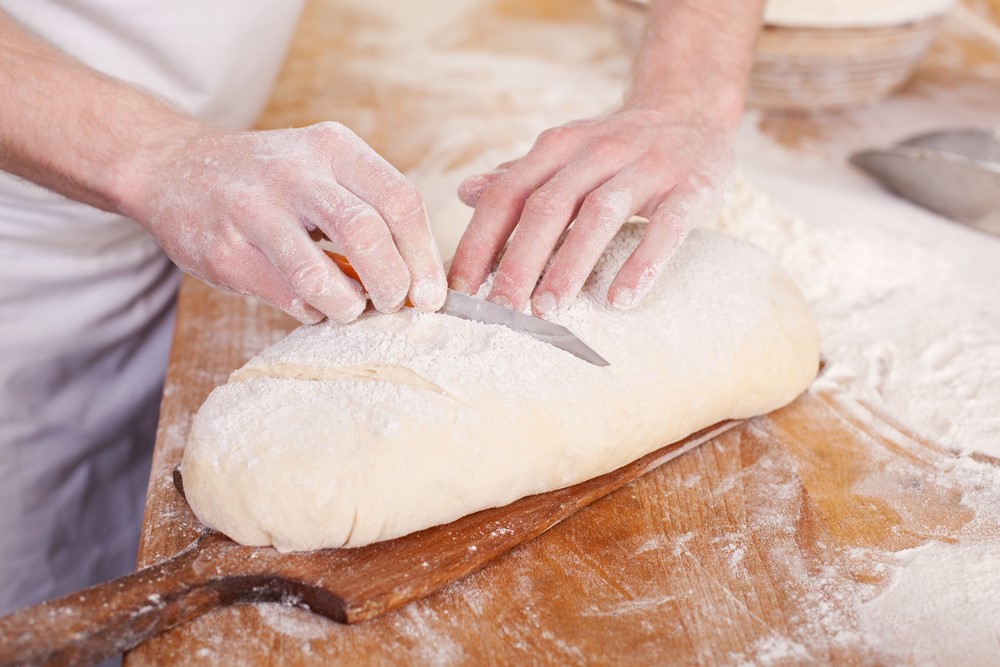
Scatter flour over them using a sifter.
Create slits using a very sharp knife and let rise for another 35 minutes or so.
\(\space\) Meanwhile, preheat an oven to a high heat of 250°C.
Bake the breads for about 15 minutes at the high heat.
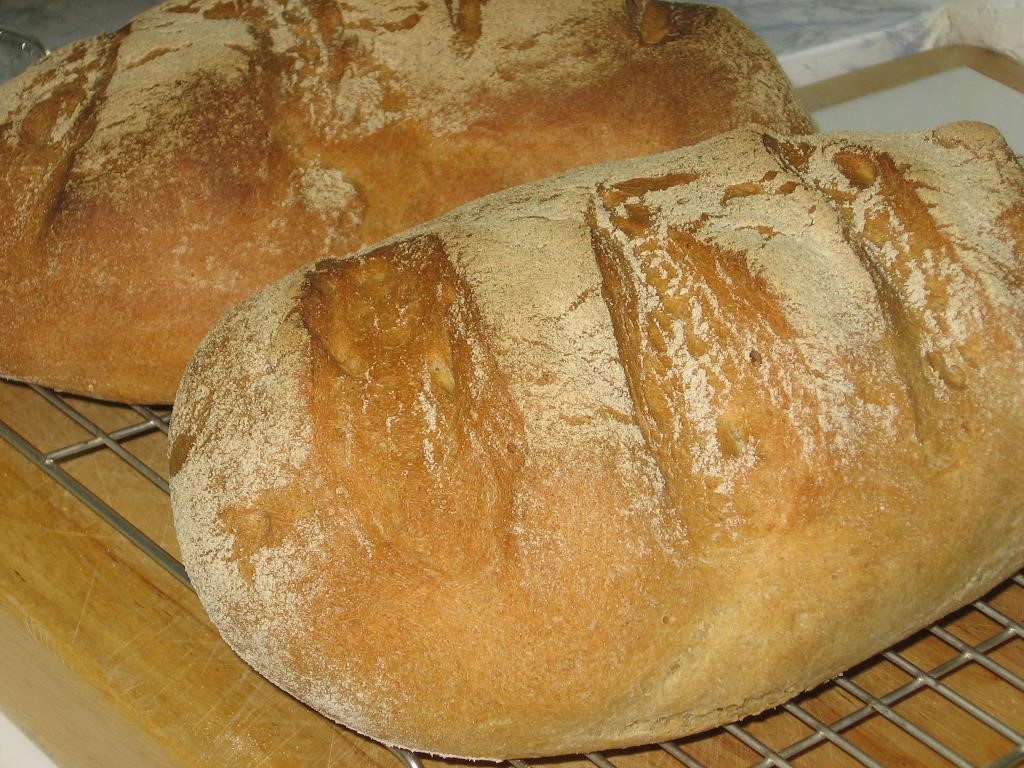
Lower the heat to 200°C and continue to bake until the surface of the loaf browns – 25 minutes – precise on the clock.
Take out, and cool on a wire rack.