The activity sheet (by: Dr. Julia Vorobeichik) invites you to dive into the hidden meaning of the lotus flower – an ancient Egyptian symbol representing creation, life, and purity. You will get to know the beliefs that were tied to this flower, the use made of it in rituals and medicine, and the difference between its various species. Inspired by the lotus, we will embark on a creative journey and connect an ancient symbol to modern art.
Information for Parents
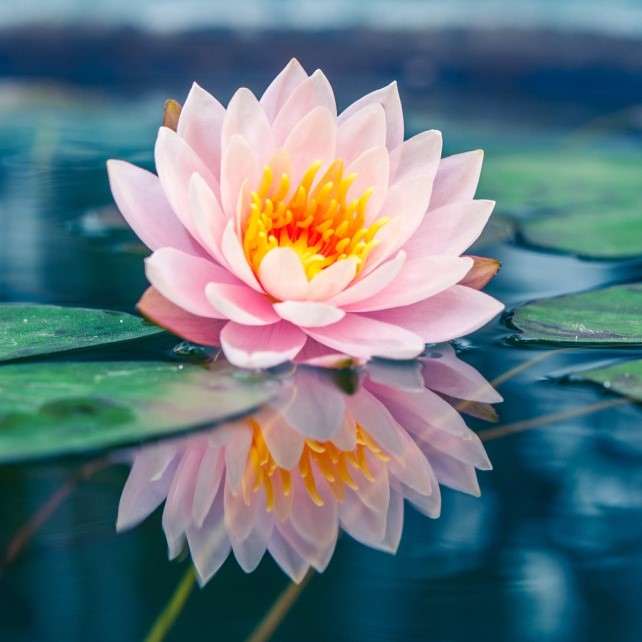
Lotus (Nuphar, in Hebrew) is a general name for many species of plants, and specifically for water plants, and sometimes it is also called a water lily. In nature, lotus flowers exist in all sorts of colors and shapes, but beyond that, the lotus flower holds a special meaning for Egyptians and constitutes an important symbol in Egyptian mythology.
The ancient Egyptians cultivated the white lotus in ponds and marshes. Due to its importance, we can often see this flower in ancient Egyptian decorations. Also, because of the importance of the lotus flower, the ancient Egyptians created perfume from it, and Egyptian women even used it as a decoration. Beyond the artistic and practical meaning, the Egyptians believed that the lotus flower gave them strength and power, and it was considered a sacred symbol, which is why its remains were included among the findings found in the tomb of Ramesses II.
One of the species, the blue lotus, which is also called the blue nymphaea, grows in a blue and light blue color in the Nile River, and it is closely related to the culture of ancient Egypt and the period of the Pharaohs. The Egyptians called it the “sacred Egyptian lotus.” In addition to the general uses, the Egyptians used to drink the extract of this flower, which brought its users to a feeling of euphoria and hallucinations. To this day, perfume, tea, wine, and liqueur are produced from its blue leaves.
The Activity
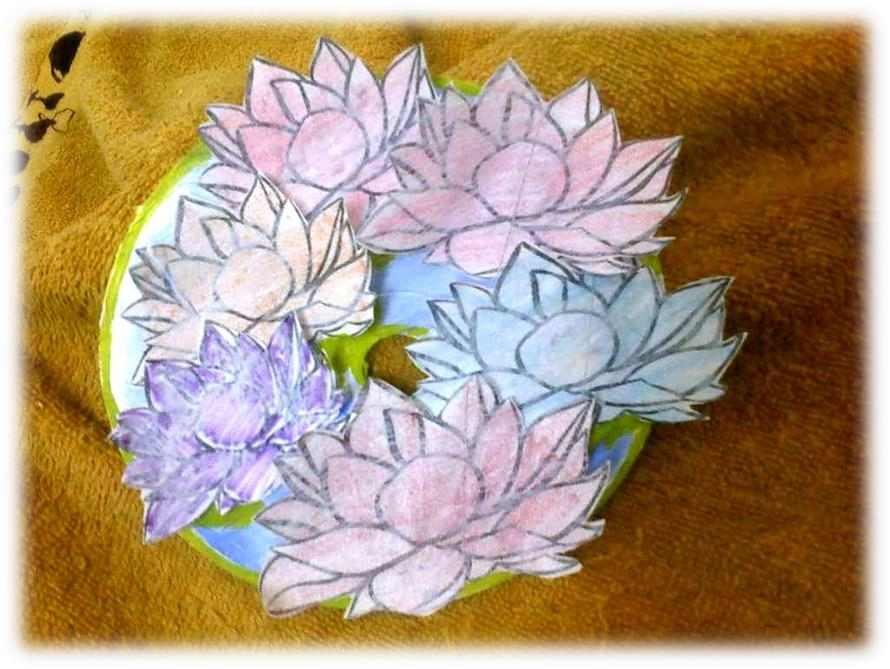
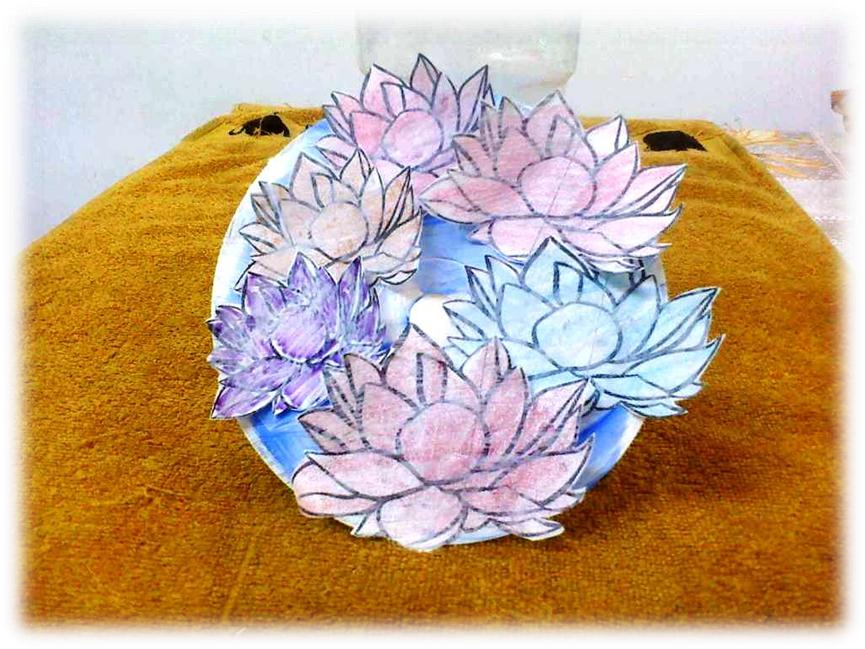
In the activity, we will prepare a mobile / picture of lotus flowers.
Crafts that characterize Egypt are difficult and complicated to do with children. Therefore, in order to get to know the symbol of Egyptian culture, we will go a “slightly different” way.
We will start with an explanation of what the lotus flower is, what its history is, and how it is connected to Egypt (see above, general information).
We will continue by emphasizing the importance of plastic recycling: The ancient Egyptians utilized natural resources (like the lotus and papyrus) wisely. Today, the Nile, like many water sources, suffers from pollution. As part of the creation inspired by the lotus, challenge yourselves to use recycled materials. A model of the lotus flower, or other Egyptian decorations, can be created from old plastic bottles, cardboard scraps, or fabric. In this way, you connect ancient art to modern environmental protection.
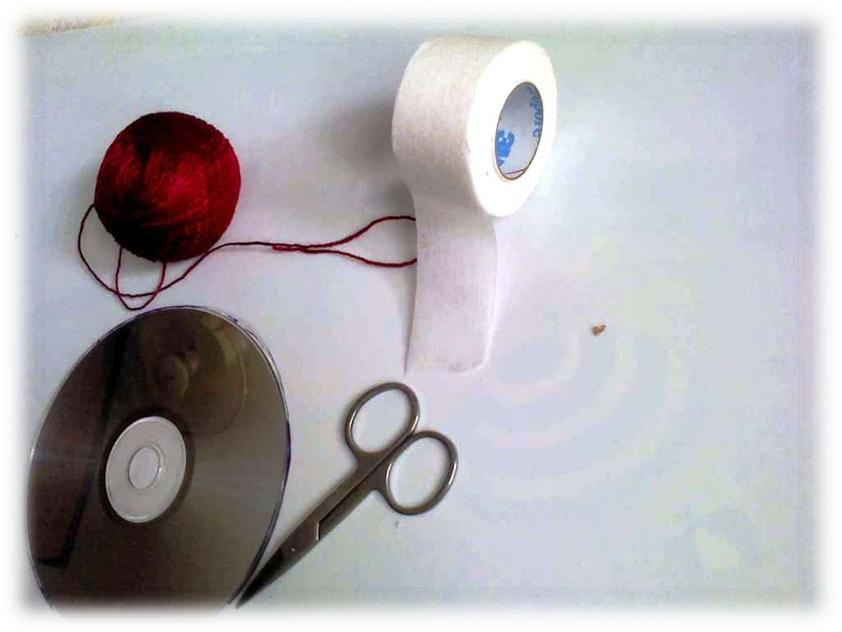
For this craft we need:
Medical tape or adhesive tape (check that it is high quality)
Scissors
White and blue paint (acrylic is preferred, gouache is also possible)
Various paintbrushes
White glue (plastic, non-toxic)
Panda pastels (oil pastels)
Colorful markers
Step 1:
Cover the colorful side of the CD with medical tape.
Tip: No matter which surface we chose as a base for the craft, we always start by preparing the base. If we chose an old CD, we will start with it.
Paint over the medical tape with white paint.
Wait for it to dry.
Step 2:
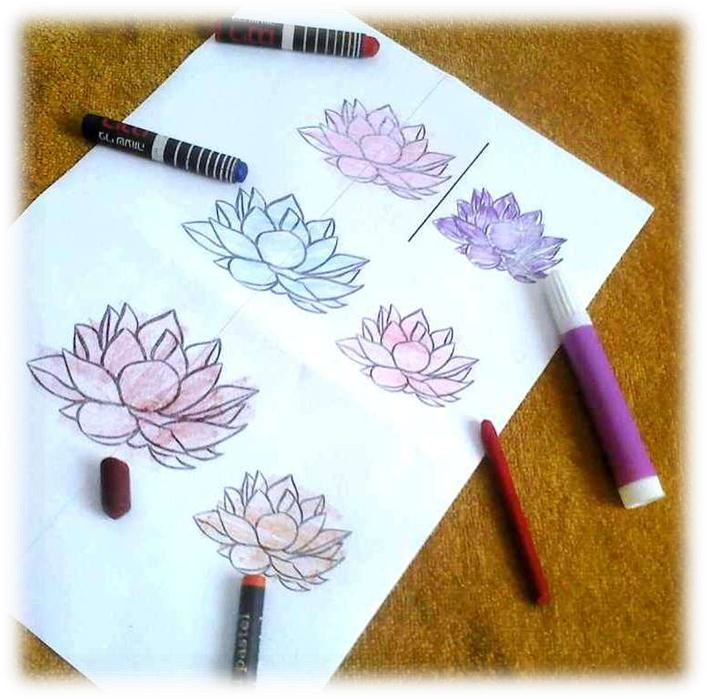
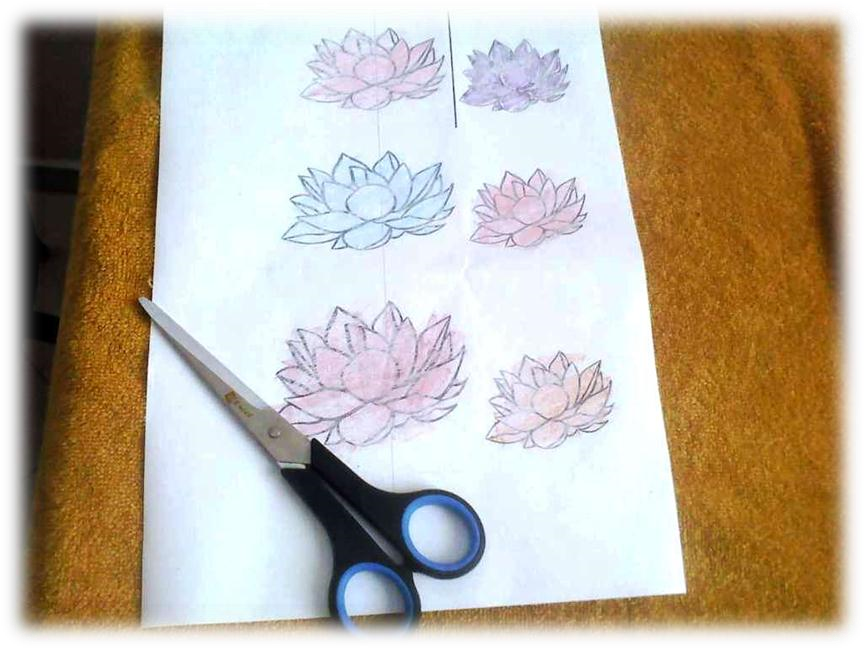
Print a lotus coloring page from the computer.
As it appears, it is desirable for the page to have six heads of lotus flowers. Different in their size, but identical in their shape.
Color them with different panda pastels according to the child’s choice. After all, lotuses exist in all sorts of colors.
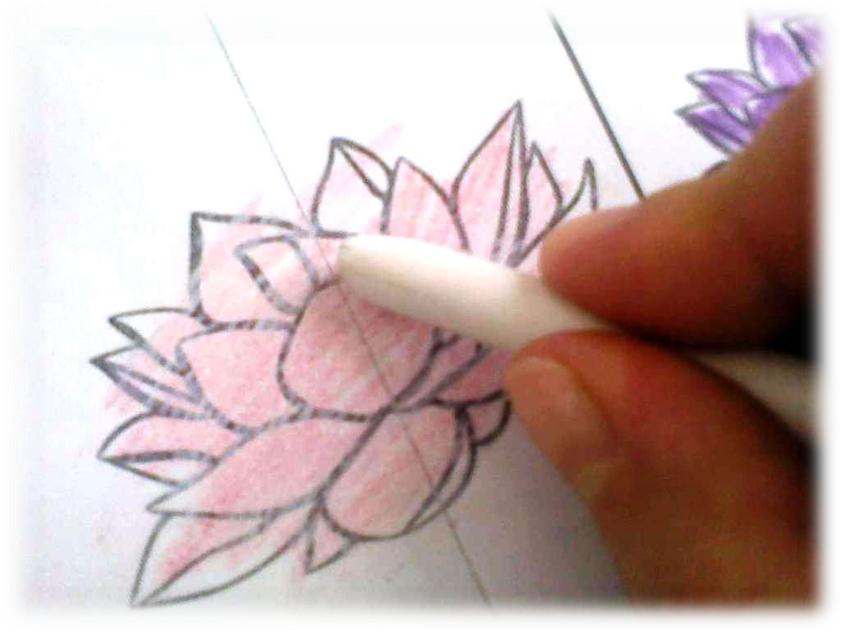
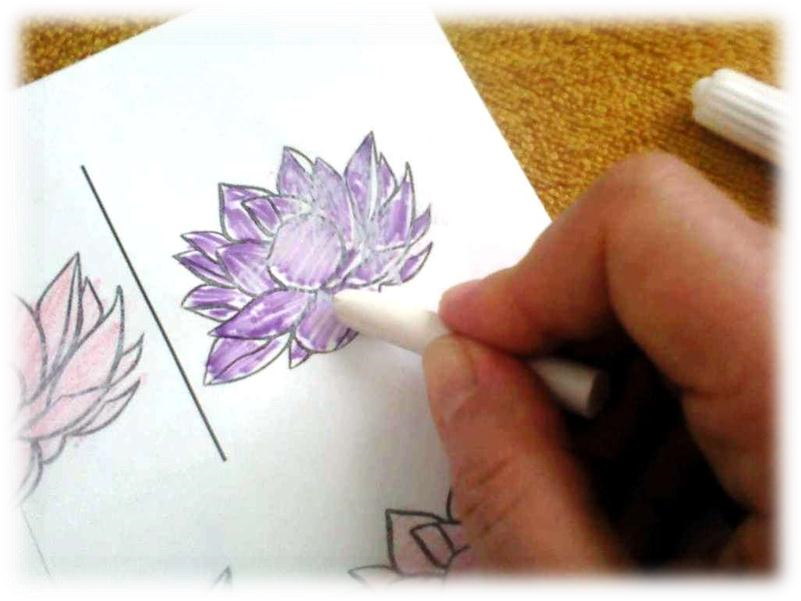
When all the flowers are colored, go over each color with a white panda pastel. This action gives each flower a pastel shade.
Tip: It does not matter if the child colored the flower and went outside the lines of the drawing. After all, you will cut out the drawing later, and the overflow will not be seen.
Step 3:
Cut out the six flowers.
Step 4:
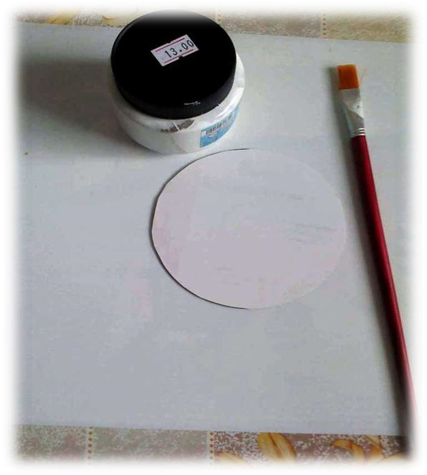
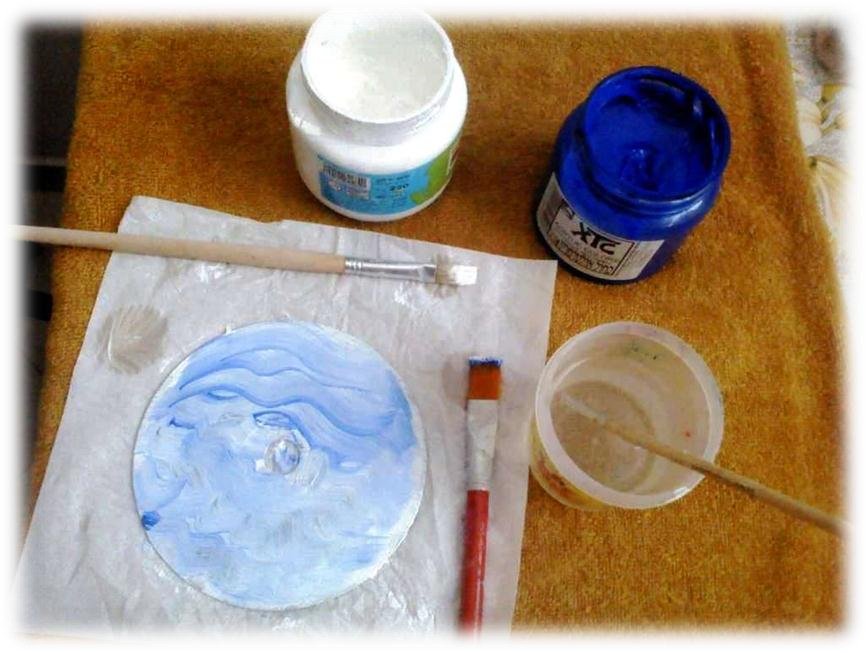
After the painted CD has dried, take white paint (again), blue paint, two paintbrushes, and a jar of water.
Dip the wet paintbrush in a little white paint and dip the second wet paintbrush in a little blue paint, creating a sort of waves. After all, the lotus flower grows on the surface of the water.
Tip: Put a piece of plastic under the CD when painting it so as not to get dirty.
Step 5:
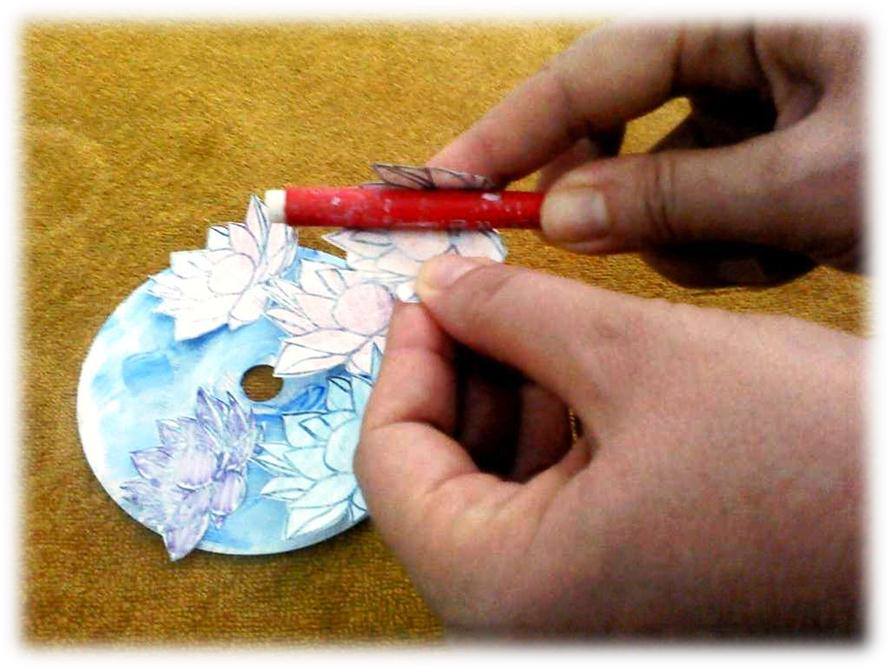
After the blue and white paints have dried, prepare the flowers we cut out for gluing. Before gluing, it is recommended to slightly roll the edges of the flowers using a pencil or any round stick (a paintbrush, for example).
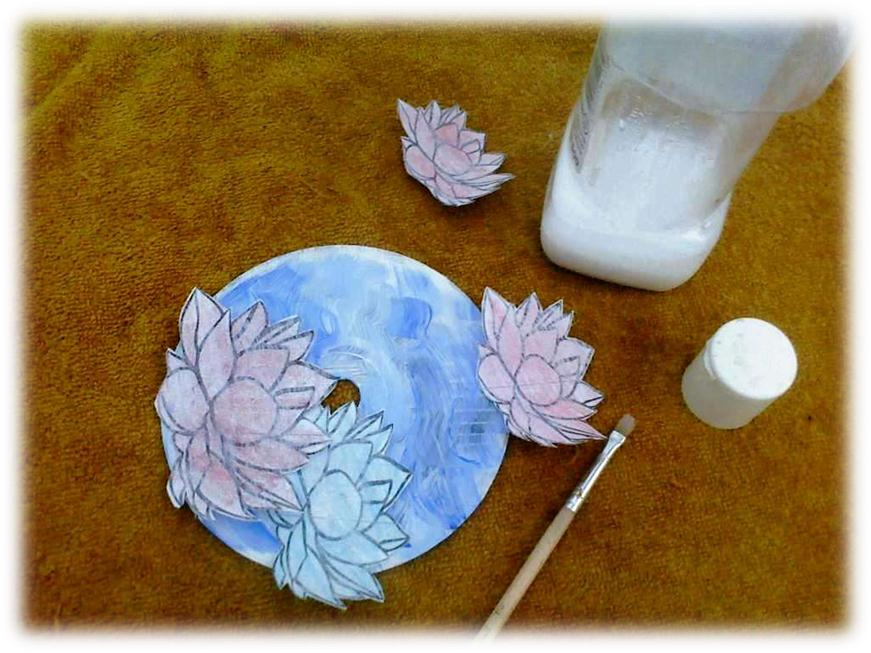
We will spread glue in the center of the flower, so that the edges will not stick.
Gluing:
Step 6:
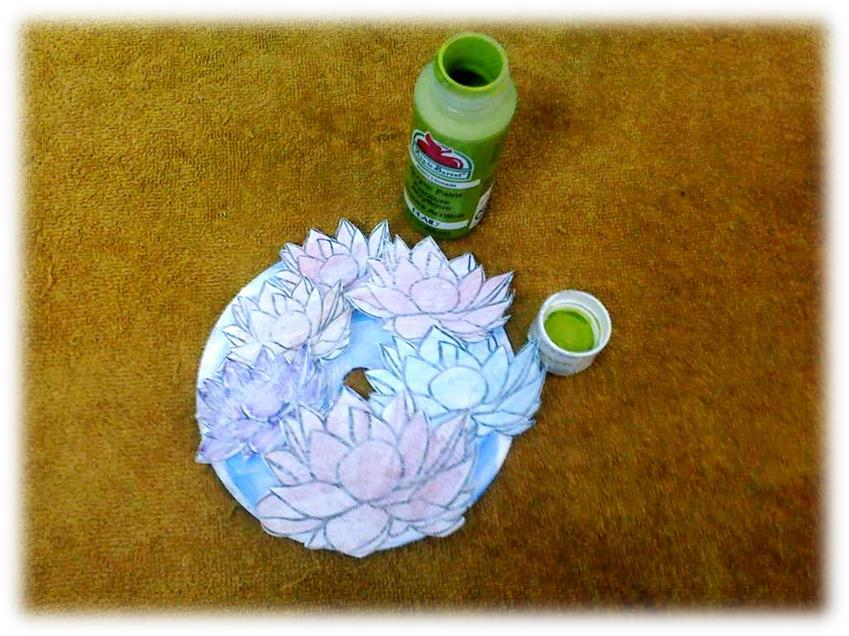
Finishing. Add green paint around (as a frame) and a little inside.
Tip: A layer of glue or varnish (water-based, odorless) can be applied in the middle of each flower to give a shine.
A fishing line can be threaded through and hung as a mobile.
To hang the picture, a loop can be glued to the back side of the CD. (The loop is glued using medical tape, but for safety, spread a little glue).