




Home \(\blacktriangleright\) Children and Youth Unit \(\blacktriangleright\) Arrows Website \(\blacktriangleright\) Museums in France \(\blacktriangleright\) Activity 6: Giving and Contribution
Activity 6: Giving and Contribution - The Story of the Hecht Museum
The activity presents the story of the establishment of the Hecht Museum at the University of Haifa and connects it to values of altruism and contribution to society as they are recognized and understood by children from their daily lives. Through the Hecht Museum, we will discuss how private collections become public domain.
This question is particularly relevant to France, where vast private collections of kings and nobles became national museums (such as the Louvre) after the French Revolution, and were defined as a “contribution” to society.
It is desirable to carry out this activity (by Hadas Netzer Dagan) as preparation for a visit and as a continuation of the “Collections” activity. It can be carried out on the way to the museum or even upon arrival and entrance to it.
The Activity
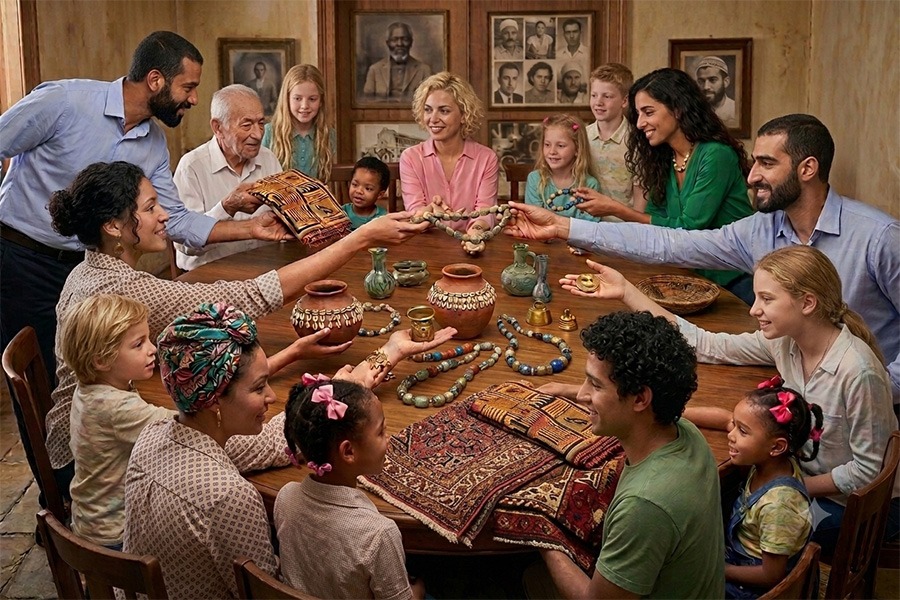
The story of the Establishment of the Hecht Museum is very similar to the historical processes at the base of the establishment of many museums in the world.
The museum was established due to the decision of Dr. Reuven Hecht to place the art and archaeology collection he gathered during his lifetime at the disposal of the public.
- Read about the process of establishing the museum as it is described on the museum’s website.
\(\space\) - Tell the children the story, while connecting it to the history of museums, as described in the “World of Collecting” activity, and to their own experience as those who have experienced or are still experiencing gathering, preserving, and displaying a collection of objects close to their hearts.
\(\space\) - Try to think with them why Reuven Hecht decided to donate his collections and assist in the establishment of the museum.
\(\space\) - Discuss the question: what do people gain when they donate something of their own to someone else or to society as a whole?
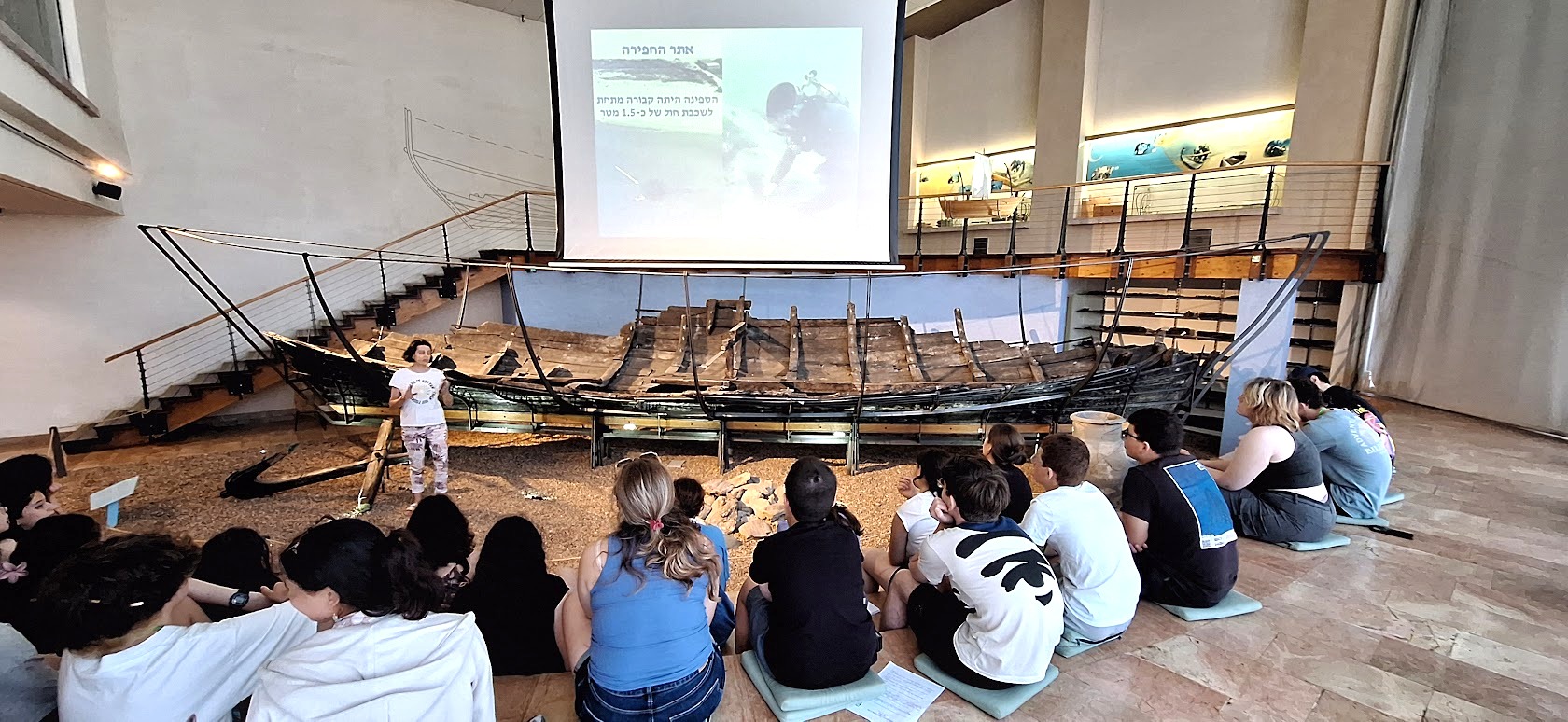
From the Exhibits of the Hecht Museum
- Is such a situation familiar to children from daily life? Try to think with them about situations in which they donated something to someone else (shared a treat they brought with them to the kindergarten with a friend, donated a game or clothing to those in need, assisted someone who asked for help, and more).
\(\space\) - How did they feel when they did this? Is it a pleasant feeling, and why?
\(\space\) - If you have the opportunity, tell them about your own experience in giving and contributing to others (in the present or past, as adults and as children) and about the feelings involved, the costs, and the gains.
\(\space\) - The conversation can be connected to the issue of relations between parents and children or grandparents and grandchildren, which are based on one hand on giving and sacrifice, and on the other hand are rewarding in satisfaction, love, and closeness.